ABM with HubSpot for B2B-SaaS Enterprise: A Pilot-First Playbook You Can Actually Ship
ABM pays off when your product is complex, the ACV is high, and the total number of winnable accounts is small. The mistake most teams make? Over-automating too soon and under-investing in data discipline and weekly rituals. This guide gives you the sweet spot: just enough structure to run a credible pilot in 90 days—using HubSpot as the backbone—without burying your team in tooling.
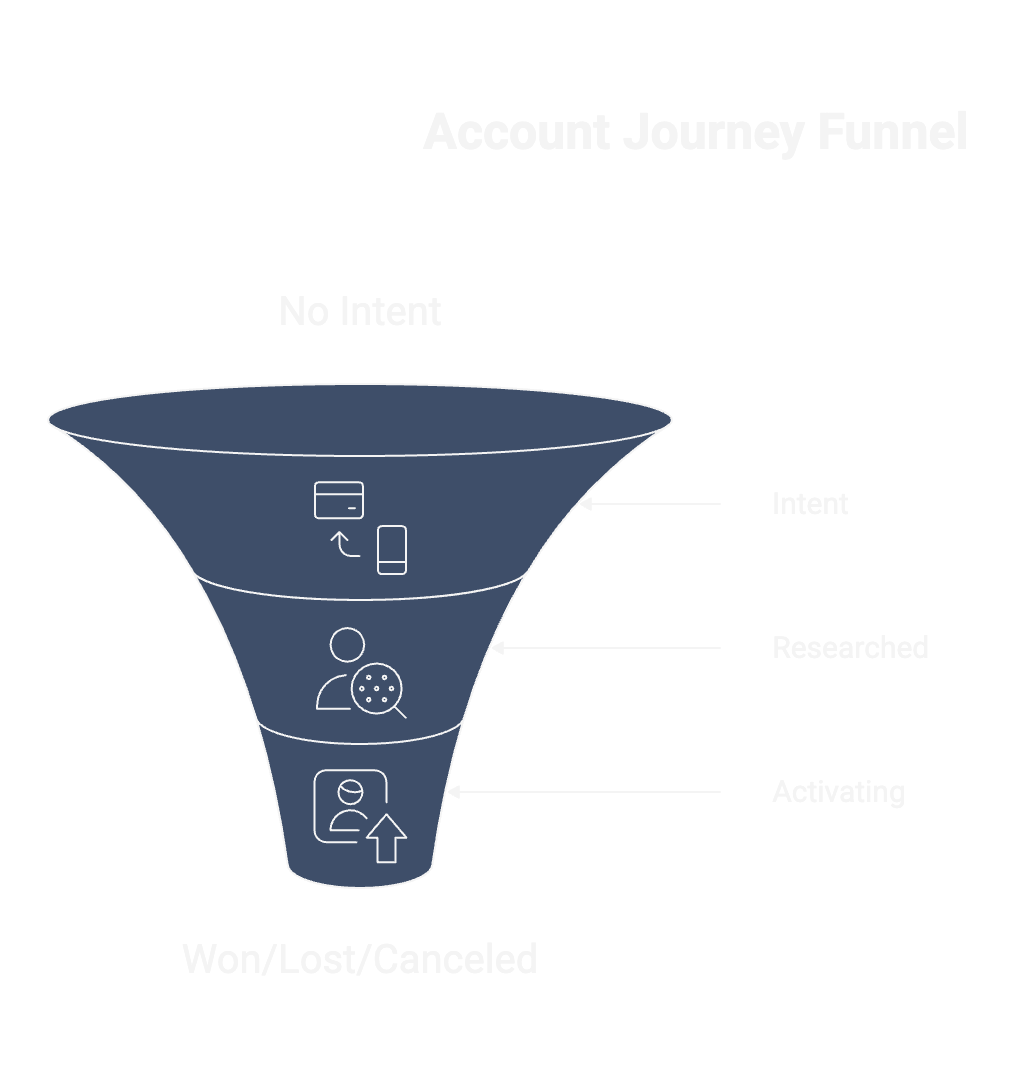
These “ABM brackets” are operational guardrails—lightweight, but enforceable—so everyone can see where an account truly stands.
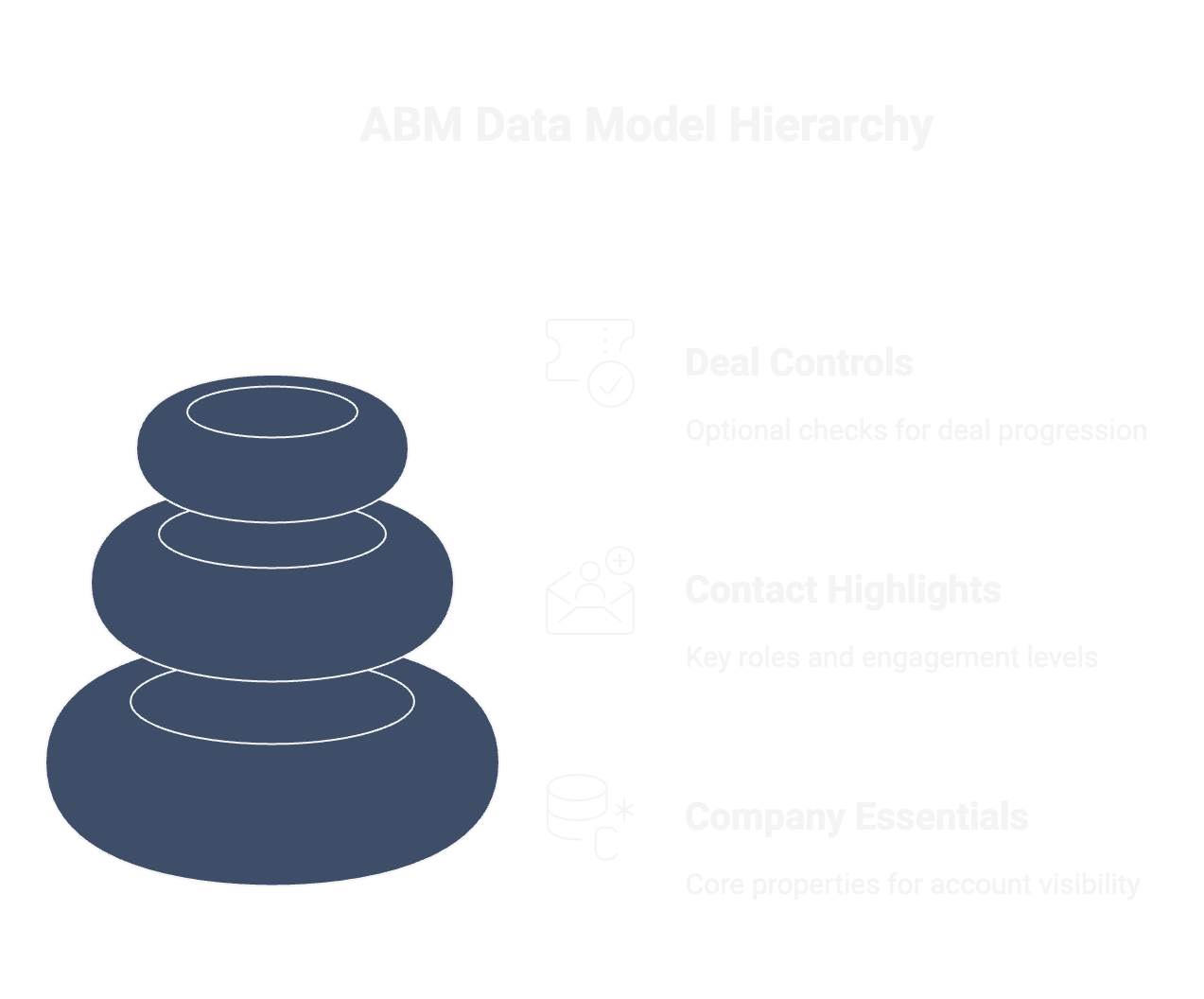
2) The Minimal Data Model (Pro-compatible, Enterprise-ready)
ABM fails without consistent fields. Create a small set of properties that make your work visible, reportable, and enforceable—mainly at company level.
Complex multi-tool cadences and heavy automation until your plays are producing meetings and threading.
7) Reporting That Leaders Actually Use
Measure at the account level and roll up learnings weekly. Your first dashboard can be this simple:
Accounts by ABM Stage (No Intent → Activating → Won/Lost)
Engaged Accounts (7/30 days) across web, email replies, meetings, and ad interactions
Meetings per Tier/Account and Threading (stakeholders per deal)
Time-in-Stage & Bottlenecks (Intent → Activating)
Coverage vs. Target by Tier (3–5× based on cycle & win rate)
On Professional: use Campaigns + Traffic Analytics; consolidate multiple “source” fields into 1–2 clean properties; add a Self-Reported Attribution field to key forms. On Enterprise: add Buyer Journey, Custom/Behavioral Events, Account-rollups, and light scoring.
8) Lightweight Scoring (Only What You’ll Act On)
Start with signals that correlate with progress; recalibrate monthly.
+10 Meeting with Champion
+8 Meeting with Economic Buyer
+5 ≥3 stakeholders active
+3 High-intent website signal or credible 3rd-party intent
−5 14 days without response while in Activating
Once stable, automate via workflows (Custom Events if on Enterprise).
9) Operating Rhythm: The Boring Stuff That Works
ABM is a team sport. Make collaboration unavoidable (in the good way).
Weekly ABM stand-up (30–45 min)
Walk the company board by ABM stage.
Remove blockers, assign owners and next plays.
Log learnings; update the activation plan.
Clear RACI
Sales: outreach & meetings.
Marketing: ads & content.
Ops: data, lists, workflows.
CS: references/use cases.
Pilot criteria
10–20 Tier-1/Tier-2 accounts; target meetings/threading/time-to-first-meeting. Review at 6–8 weeks, then scale what’s proven.
10) Stack Options (Suite vs. Best-of-Breed, Without Religion)
Start minimal: HubSpot Sales + Marketing, LinkedIn Ads (audience sync), optional enrichment/visitor-ID, calendar/meetings. Add later (if needed): sequencing tool, deeper visitor-ID, enrichment, event platform, reference hub. All-in-one suites: convenient but pricey—HubSpot + targeted add-ons covers most enterprise ABM use cases with less complexity.
11) Anti-Patterns (and the Fix)
Automating too early: validate plays manually first.
No gating: enforce conditional required fields; otherwise reports will lie.
Too many stages: keep ABM brackets lean; use notes, not stages, for nuance.
Fuzzy ownership: set and publish RACI; hold the weekly.
Lead-thinking: celebrate account advancement, not form fills.
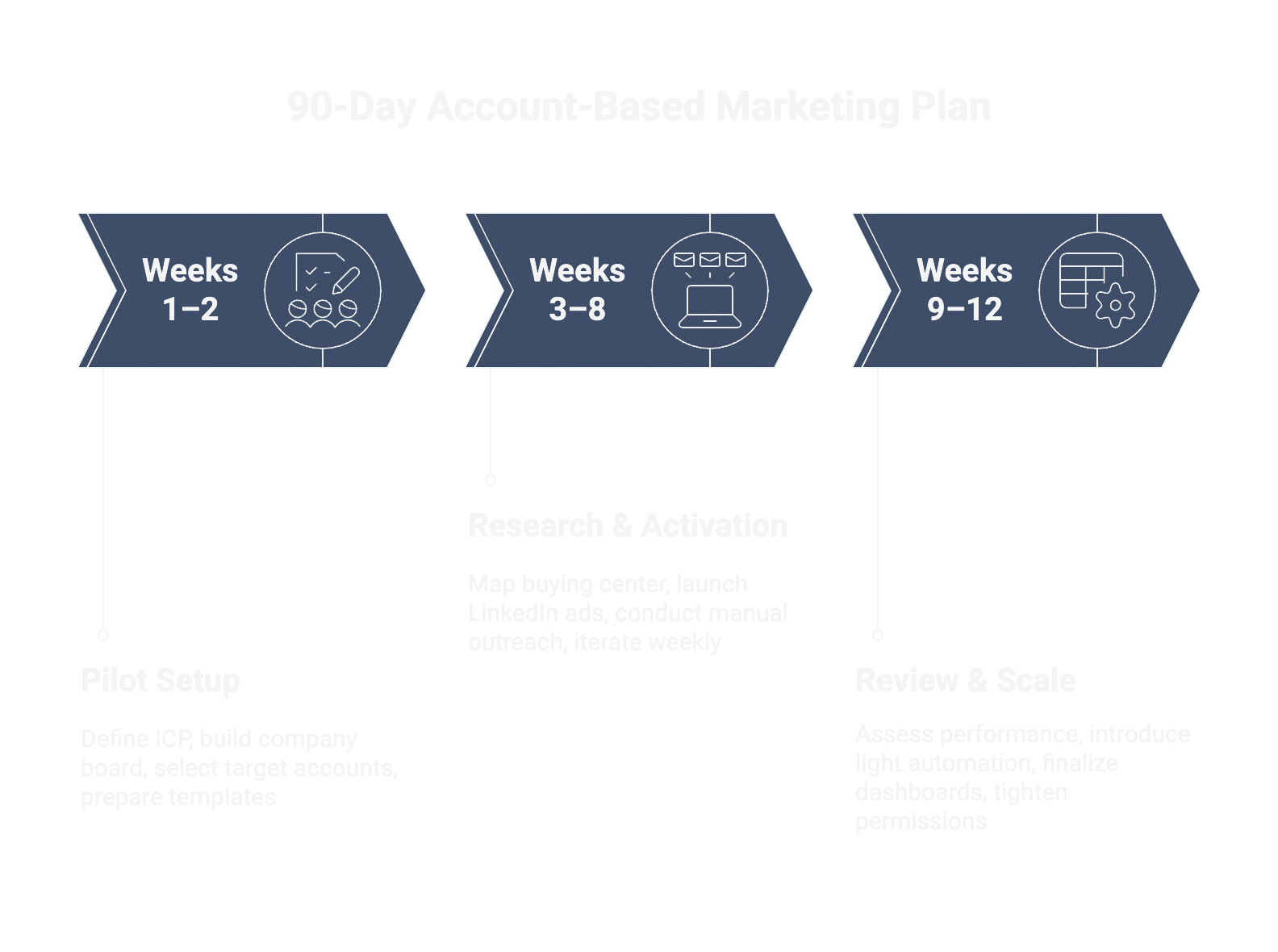
12) A 90-Day Plan You Can Commit To
Phase 1 – Pilot Setup (Weeks 1–2)
Define ICP and tiering.
Create properties/lists/views; build the company board by abm_stage.
Pick 10–20 target accounts; open research tasks.
Prepare templates: 3–5 emails, 1 champion doc, 1 case story.
Both. Track the ABM stage on the account for operating visibility; drive revenue via deals. Use gates at either level to protect data quality.
2) How do we avoid single-thread risk?
Track threading_level, set a rule for ≥3 engaged stakeholders before calling an account “healthy,” and coach multi-threading from the first meeting.
3) What’s the smallest viable pilot?
10–20 Tier-1/Tier-2 accounts for 6–8 weeks. Success = time-to-first-meeting, number of engaged stakeholders, and movement from Intent → Activating.
4) When should we add external tools?
After the pilot proves your plays and you hit constraints (e.g., deeper sequencing, visitor-ID, enrichment). Start minimal to learn faster.
5) How do we report ABM on HubSpot Professional?
Use Campaigns + Traffic Analytics, consolidate source properties, add a Self-Reported Attribution field, and build account-level dashboards around engagement, meetings, threading, and coverage.
Other Articles
5
min Read Time
-
Manuel Hartmann
LinkedIn als integrierte Go-to-Market Engine
Nur etwa 5 % deines Marktes kaufen gerade aktiv. Die anderen 95 % haben das Problem zwar ebenfalls, aber noch keinen konkreten Anlass, sich damit zu beschäftigen. Ob du in 6, 12 oder 18 Monaten auf der Shortlist stehst, entscheidet sich vorher. Genau dort endet klassisches Performance-Marketing, und genau dort beginnt Demand Generation auf LinkedIn.
Wieso bei <1’000 Mitarbeitern HubSpot Marketing Hub sinnvoller ist als Marketo
Für CEOs, CROs & Marketing Leader, die Tools operieren, nicht bewundern wollen.
Die meisten Marketo-Setups in mittelgroßen B2B-Unternehmen haben ein gemeinsames Problem: Sie können mehr, als das Team jemals nutzt. Über Jahre gewachsen, vollgepackt mit Smart Campaigns, die niemand mehr anfasst, Scoring-Regeln, denen der Vertrieb nicht traut, und Reporting, das keiner als Entscheidungsgrundlage ernst nimmt. Bezahlt wird für die Vollausstattung. Genutzt wird ein Bruchteil.
Genau hier liegt die eigentliche Frage – und sie hat nichts mit Feature-Listen zu tun. Sie lautet: Welches System kann mein Team in seiner realen Größe tatsächlich bedienen, ohne dafür eine eigene Marketing-Ops-Abteilung zu unterhalten?
Signals Don't Tell You Who Wants to Buy. Here's What They Actually Tell You
Open any sales newsletter today and you'll find the same promise: monitor "buying signals" and "intent data", then pipeline will follow. The vendors selling these tools have trained an entire generation of GTM teams to believe that a website visit, a LinkedIn profile view, or a competitor keyword search means someone is ready to buy.

.png)
.png)